dataplace.ai's clients include one of the fastest-growing retail chains in Poland, a leading player in the supermarket segment.
Sales representative activities can be even more effective by leveraging location intelligence and insights into points of sale and their customers. See how our client reached a higher level of sales with the help of dataplace.ai technology.

An FMCG company bases its sales model on the activities of representatives who execute sales plans for new product categories by maintaining relationships with existing retailers and identifying and establishing cooperation with new partners. However, they focused their efforts on locations they were familiar with, which were not suitable for the product being introduced because they did not reach the designated target group. As a result, the performance of specific products was not as high as it could have been.
This was due to several factors, including limited access to reliable data on customers visiting specific stores, the characteristics of the area, and the POS themselves, which led representatives to rely solely on subjective feelings about location potential and aggregate store results.
It is worth noting that such subjective assessments are not always wrong, as established relationships with retailers often make it possible to carry out activities even in lower-potential locations. Nevertheless, hard data and analysis ensure reliable success. Another problem was the lack of a consistent brand strategy and a focus on places where sales results were already high instead of points where there was potential for sales volume growth.

"Additionally, broader knowledge about POS locations and their surroundings enabled better contract negotiations. Key information enabling this included data on the presence of specific target groups, as well as the sales potential of network locations. The company also gained an understanding of how their distribution network changed during the pandemic. Locations that once delivered high results saw a decline following shifts in customer behavior and purchasing habits, and other locations now hold better potential."
To enable and facilitate the selection of appropriate locations for sales representatives, we decided together with the client that it was necessary to create a store scoring system to guide employees in their decision-making process, ensuring their actions aligned with the company's strategy. The next step was to analyze the locations based on selected criteria and provide a tool to assist representatives in evaluating and selecting sites for contract negotiations and further activities.

"After the client defined the aspects fundamental to them (including the number of visitors to specific POS locations, residents' food spending, the age of people living in the area, and many others), which were incorporated into the model defining individual locations, we decided to create an analysis presenting the sales growth potential of the visited sites."
After the client defined the fundamental aspects (including the number of visitors to a given POS, local food expenditure, the age of residents in the area, and many others) to be included in the model for evaluating individual locations, we decided to create an analysis showing the sales growth potential of the visited sites.
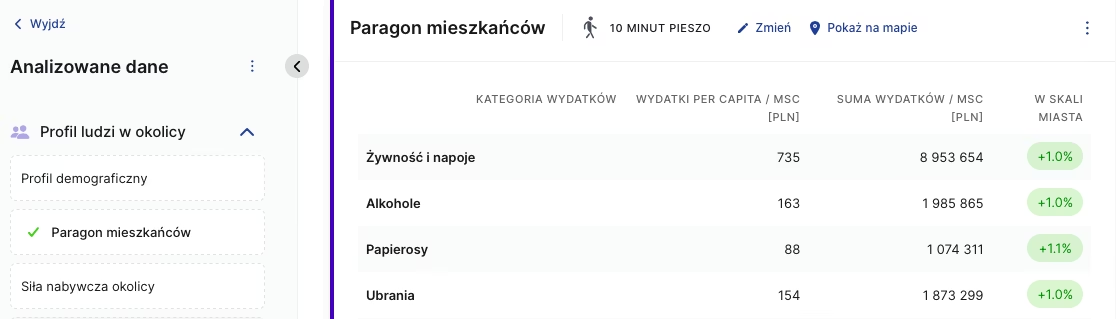
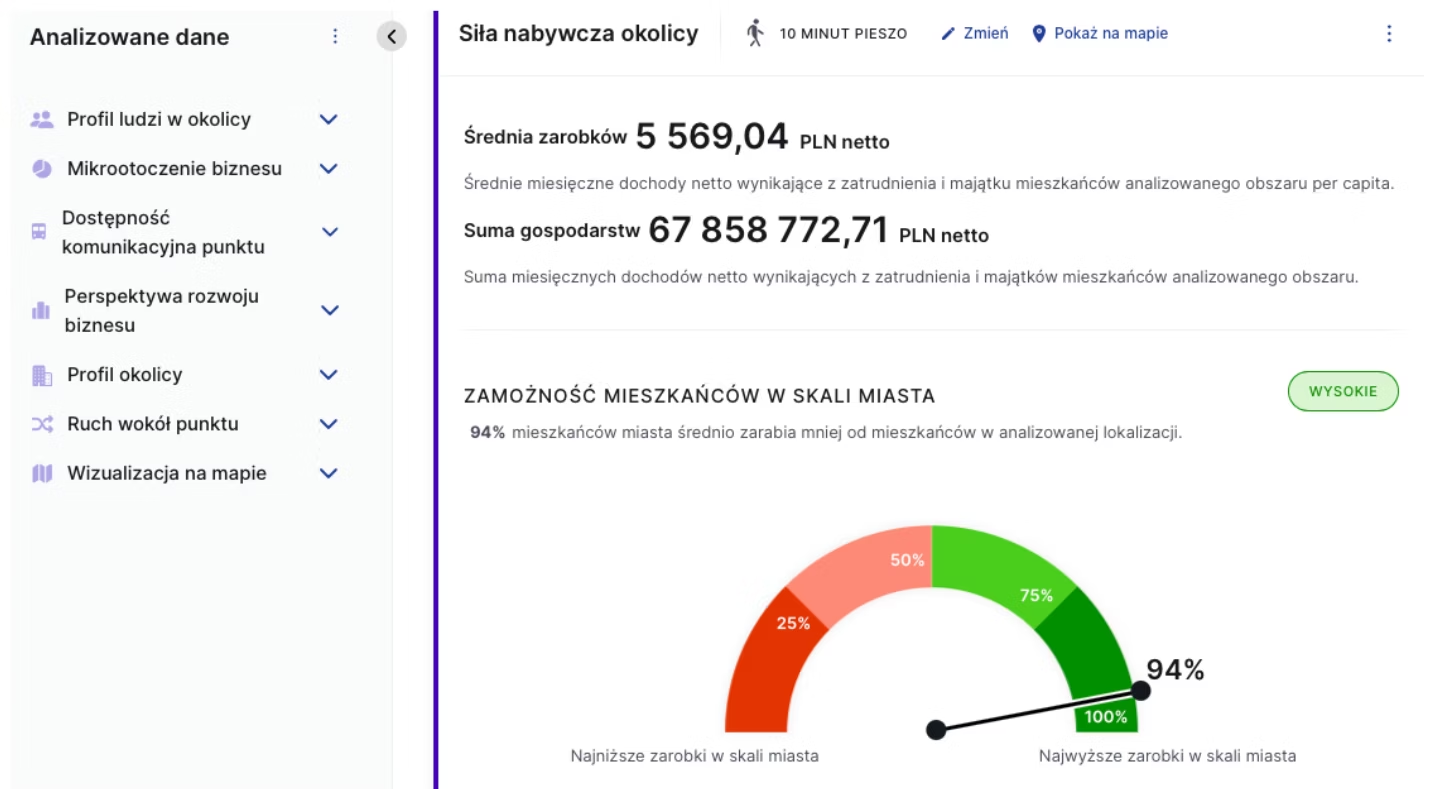
Each criterion was assigned a specific weight (e.g., a weight of 5 for traffic intensity around the store, and a weight of 2 for the monthly income level of local residents). We presented the results by comparing the locations against each other.
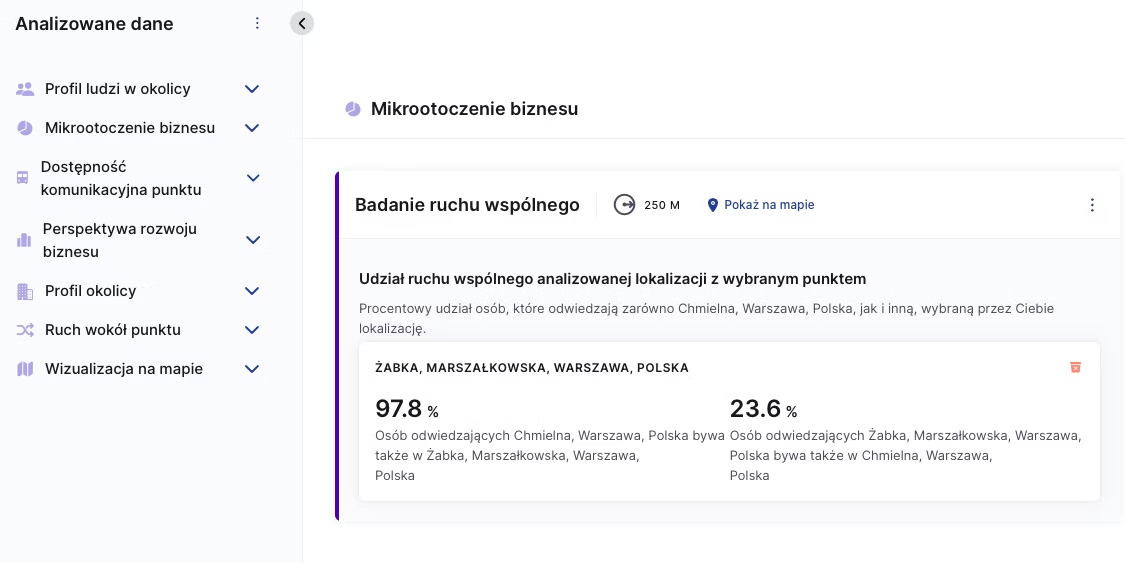
During the selection process, it was also important to determine the distance from competitors and the probability that a given retail point would be chosen as a shopping destination by local residents. Therefore, we provided the client with access to additional functionality: shared traffic analysis and customer attraction forecasting.
The analysis results were grouped so that locations with the highest sales potential for a given product appear at the very top.
To better illustrate this, we used a color-coding method that clearly evaluated stores in the region. This allowed sales representatives to focus their efforts on locations where they could finally scale sales and, consequently, meet their targets.
Additionally, broader knowledge about POS locations and their surroundings enabled better contract negotiations. Key information enabling this included data on the presence of specific target groups, as well as the sales potential of network locations. The company also gained an understanding of how their distribution network changed during the pandemic. Locations that once delivered high results saw a decline following shifts in customer behavior and purchasing habits, and other locations now hold better potential.
If you also want to effectively direct your sales representatives to the right POS locations while lowering costs and increasing profits, contact us!
You will gain access to reliable data that will allow you to: